
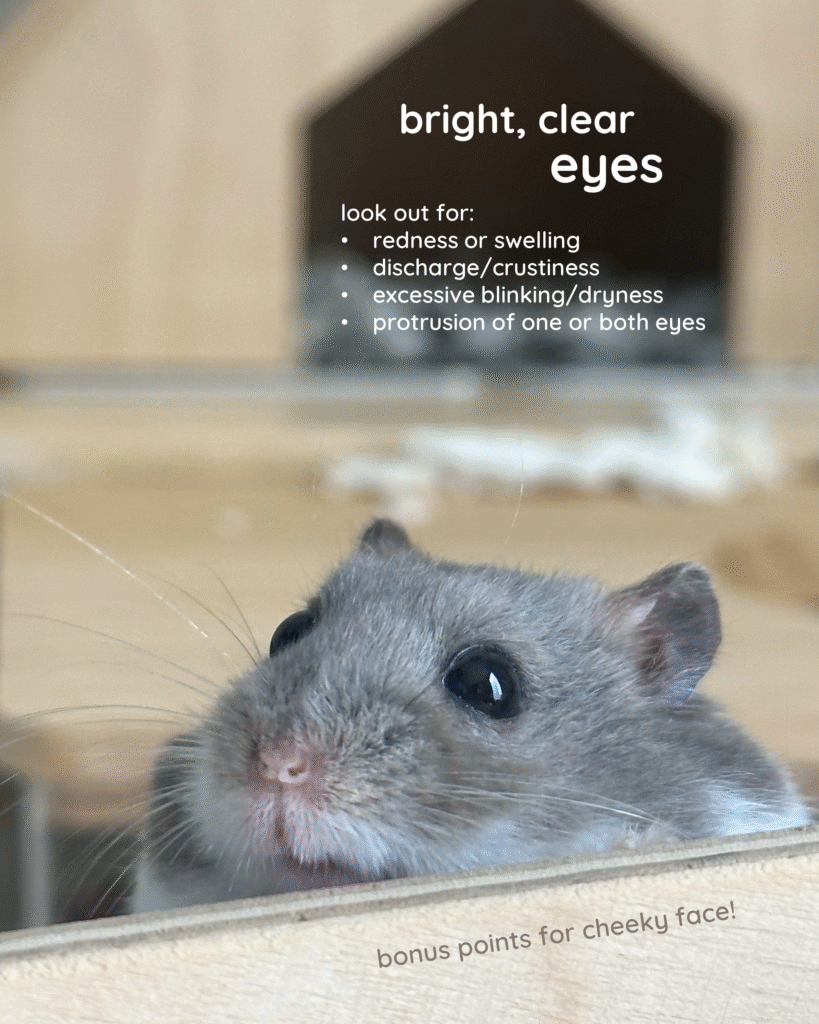
Bright, clear eyes
Eyes should be bright and clear with no signs of injury.
Look out for:
- Redness or swelling
- Discharge or crustiness
- Excessive blinking / dryness
- Protrusion of one or both eyes
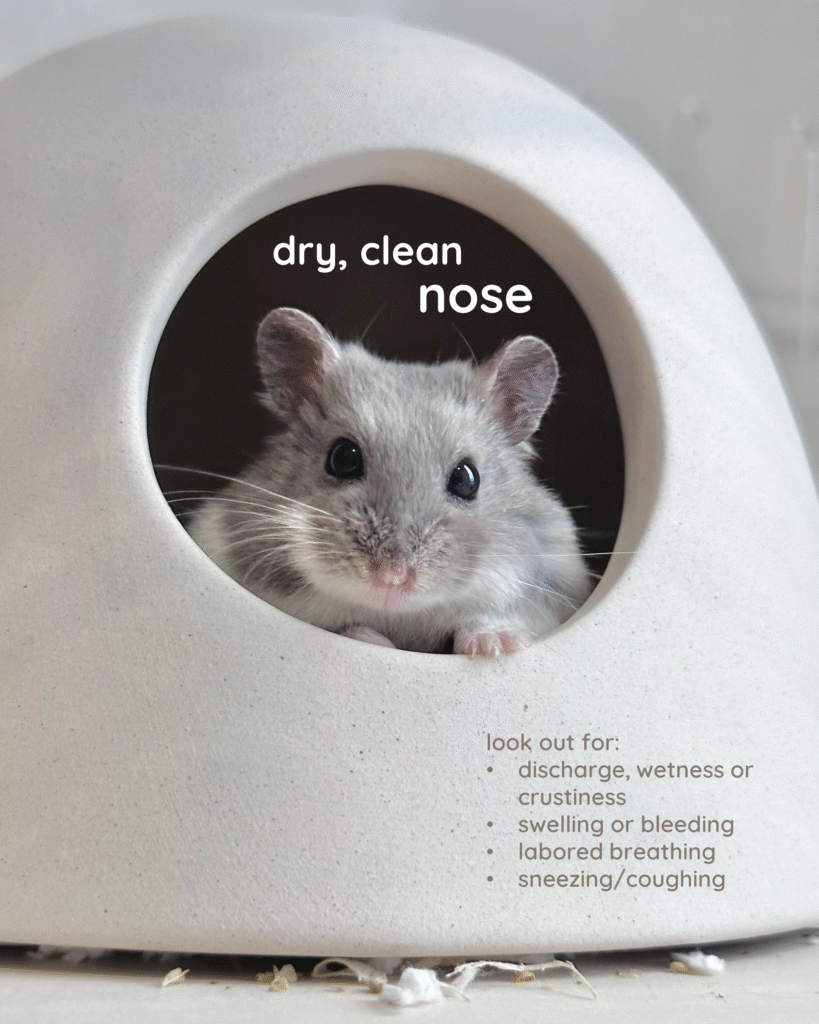
Dry, clean nose
Look out for:
- Discharge, wetness or crustiness
- Swelling or bleeding
- Labored breathing
- Sneezing/coughing
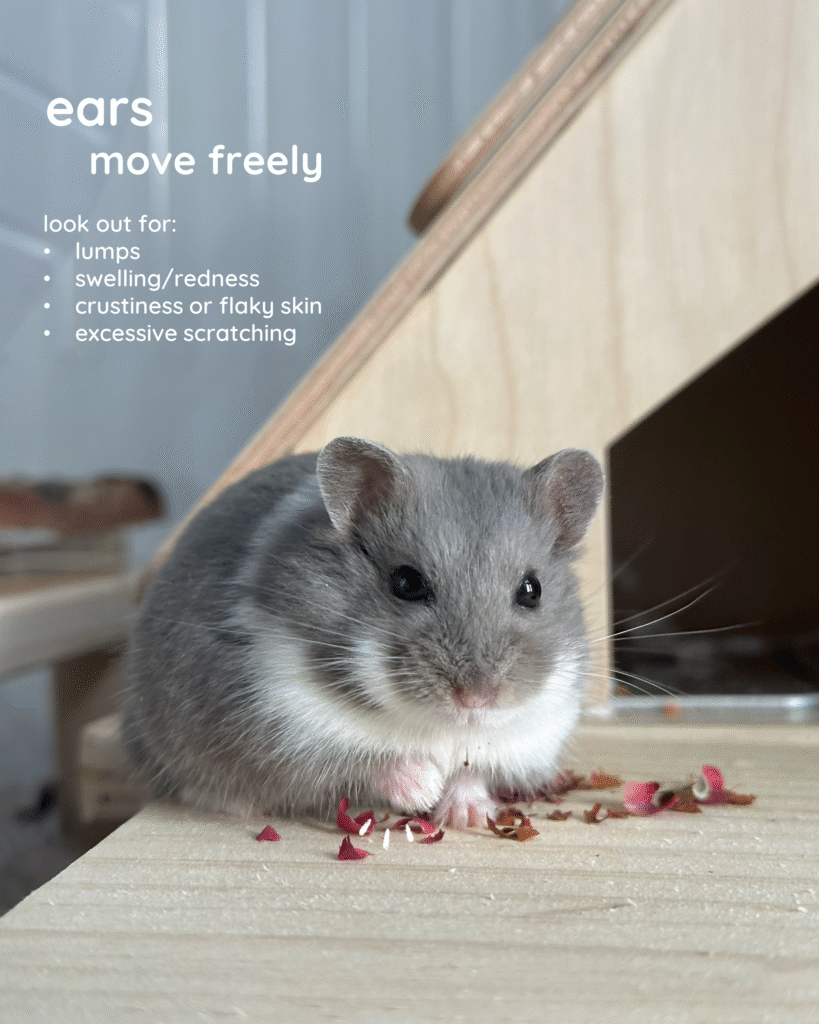
Dry, clean nose
Look out for:
- Discharge, wetness or crustiness
- Swelling or bleeding
- Labored breathing
- Sneezing/coughing
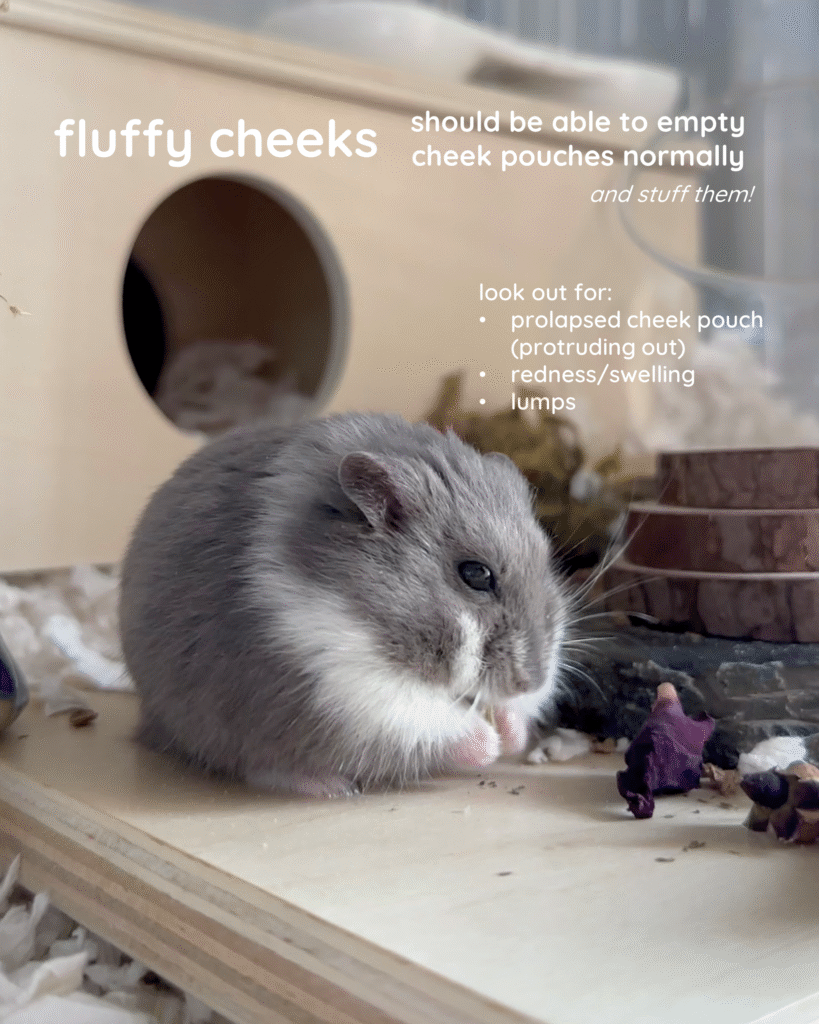
Fluffy cheeks
Healthy hamsters should be able to empty their cheek pouches normally. Any signs of a cheek pouch that is injured (e.g. redness) or ‘stuck’ (e.g. protruding out) is a cause for concern.
Look out for:
- Prolapsed cheek pouch (protruding out)
- Redness/swelling
- Lumps
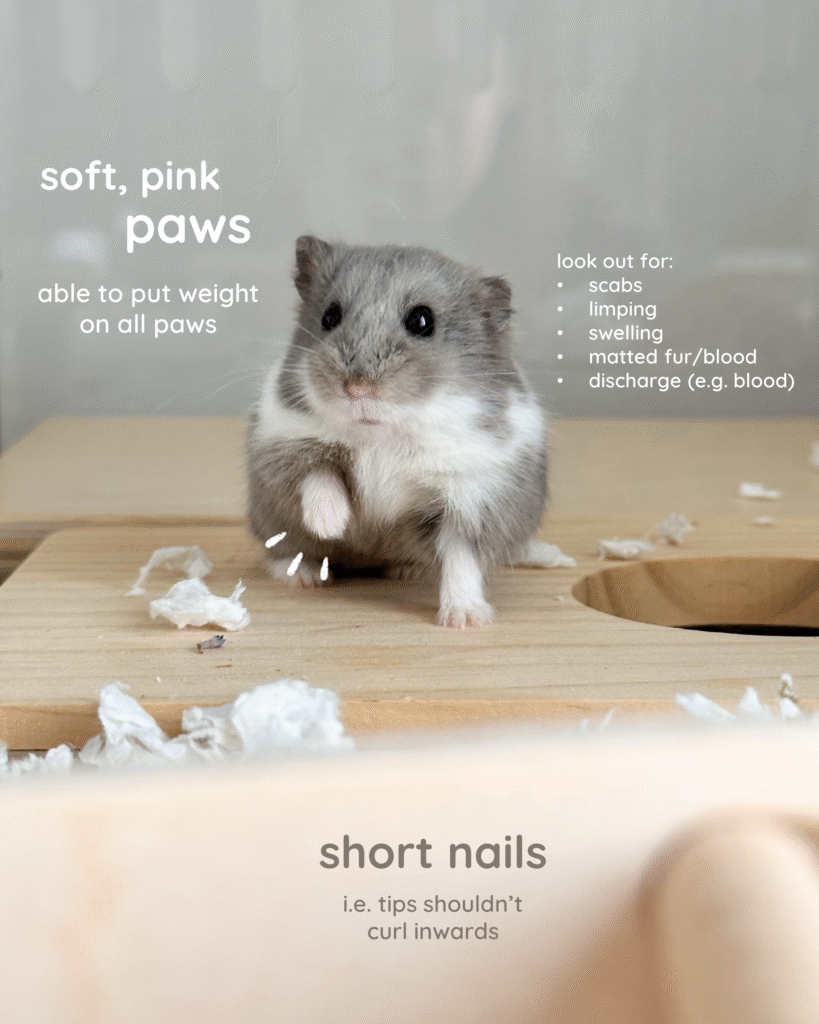
Dry, clean nose
Hamsters’ paws should be soft and pink and they should be able to put weight on all paws equally.
Look out for:
- Scabs
- Limping
- Swelling
- Matted fur/blood discharge (e.g. blood)
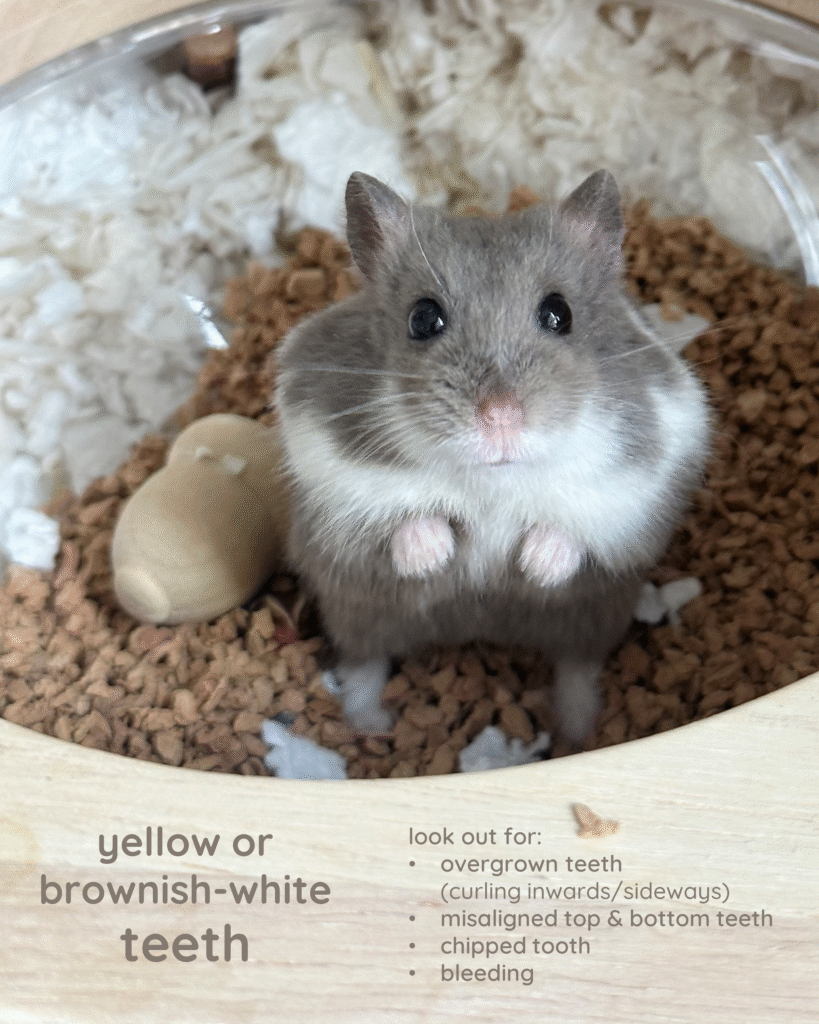
Yellow or brownish-white teeth
A hamster’s teeth constantly grows throughout their life and are naturally worn down by chewing on appropriate materials. Providing safe chew toys and varied textures of food (e.g. pellets) can help to maintain good dental health and ensure their teeth isn’t overgrown.
Look out for:
- Overgrown teeth (curling inwards/sideways)
- Misaligned top & bottom teeth
- Chipped tooth
- Bleeding
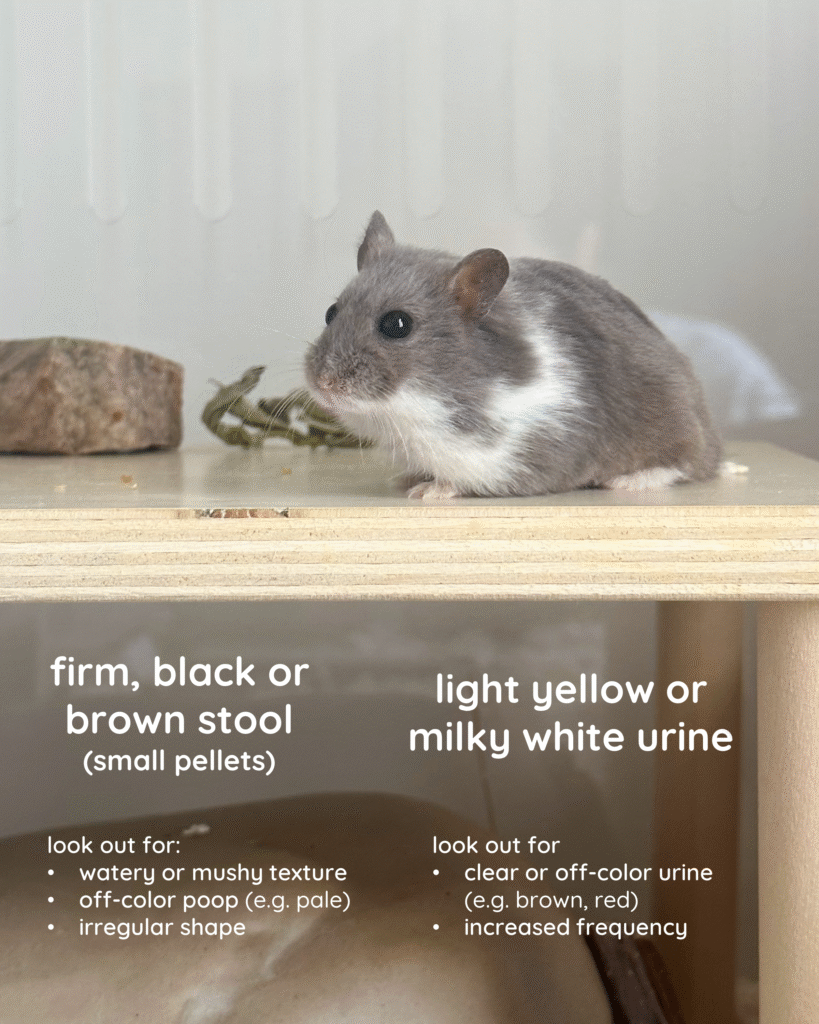
Stool
Healthy stool should be in the shape of small pellets that is firm in texture and black or brown in color. Water or mushy stool can be a sign of wet tail, which requires prompt veterinary care as it can quickly become fatal for hamsters.
Look out for:
- Watery or mushy texture
- Off-color poop (e.g. pale)
- Irregular shape
Urine
Healthy urine should be a light yellow or milky white color.
Look out for:
- Clear or off-color urine (e.g. brown, red)
- Increased frequency
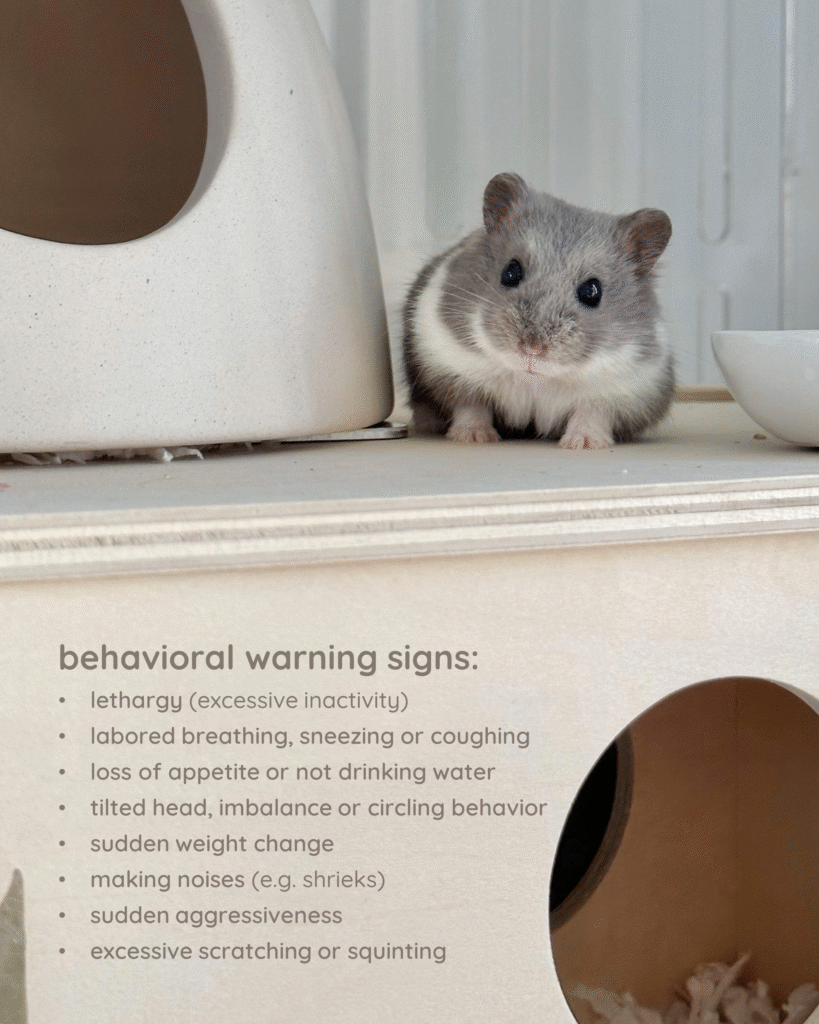
Behavioral warning signs include:
- Lethargy (excessive inactivity)
- Labored breathing, sneezing or coughing
- Loss of appetite or not drinking water
- Tilted head, imbalance or circling behavior
- Sudden weight change
- Making noises (e.g. Shrieks)
- Sudden aggressiveness
- Excessive scratching or squinting
Any of these behaviors can be an indicator of an underlying issue – please seek prompt veterinary care if any symptoms or concerns.